
The Institute for Innovative Learning (IL), Mahidol University, organized the workshop “Exploring Science and Innovation” for Grade 7 students from Nawaminthrachinuthit Satriwitthaya Phutthamonthon School on September 21, 2026, at the Chailerd Pichitpornchai Conference Room, 1st Floor, Institute for Innovative Learning, Mahidol University, Salaya Campus, Nakhon Pathom.
The workshop aimed to foster students’ interest and understanding of science, technology, and innovation through a hands-on learning approach. Students were encouraged to ask questions, explore, experiment, design, and develop solutions while connecting scientific knowledge with familiar situations and practical applications in everyday life.
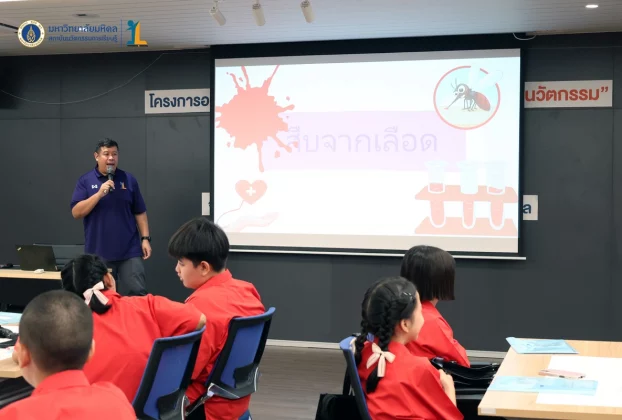
The first activity, “Blood Investigation,” was conducted by Dr. Phongphatai Kitroongrojjanaporn, Mr. Namchok Khunmuenwong, and Mr. Phattanaphong Khonthiang. Students engaged in an investigative learning process that encouraged observation, information gathering, analytical thinking, and reasoning to identify answers based on the given challenges. The activity supported the development of systematic thinking and the application of scientific processes to problem-solving.
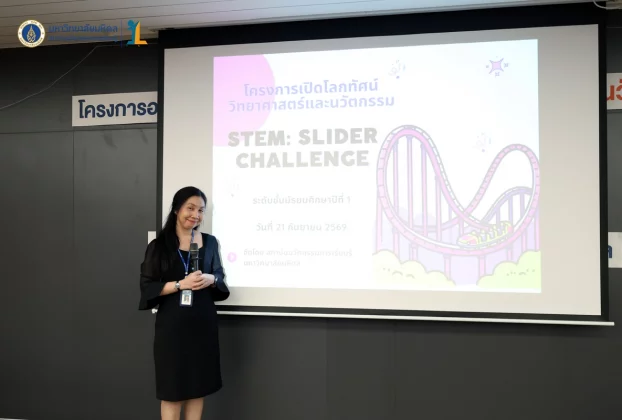
The second activity, “Roller Coaster,” was conducted by Ms. Atcharaphan Phothong and Mr. Jaturong Payomyaem. Students explored scientific and engineering concepts through the design and construction of a Roller Coaster model. They tested their designs and refined them based on the results. This process encouraged students to practice design thinking, learn through experimentation and trial and error, and develop problem-solving and teamwork skills.
The third activity, “Wind Energy,” was conducted by Dr. Phongphatai Kitroongrojjanaporn, Mr. Namchok Khunmuenwong, and Mr. Phattanaphong Khonthiang. The activity introduced students to the concept of wind energy and the application of natural energy sources through hands-on design, experimentation, and observation. Students were encouraged to explore the connection between scientific principles, technology, and innovation for the appropriate use of energy.
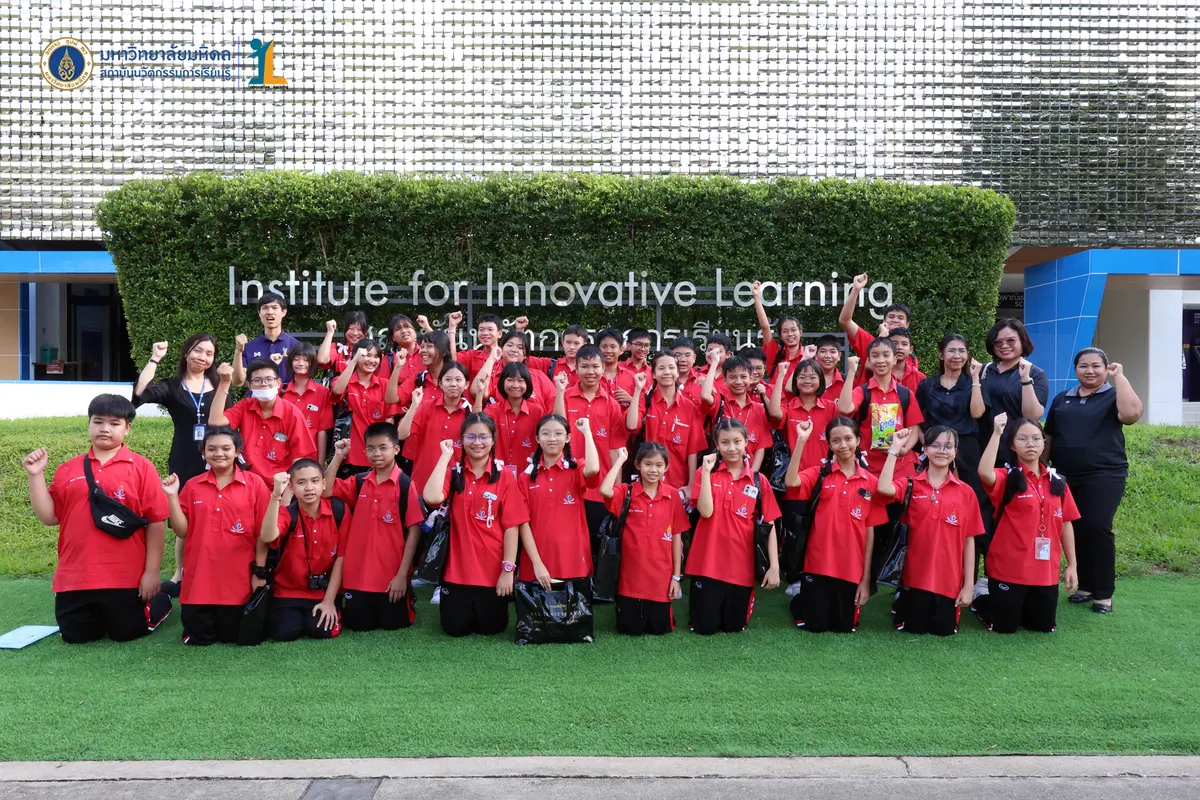
The workshop concluded with a “Closing Section: Knowledge Review, Reflection, and Expanded Knowledge – Applying Programming Knowledge to Robotics Innovation in Everyday Life.” Students reviewed and reflected on what they had learned throughout the workshop while exploring connections between Programming and Robotics and their applications in everyday life and future innovation. The activity concluded with the presentation of awards and certificates, followed by a group photo.
The program also provided a learning opportunity for teachers through the “IL Learning Innovation Tour: Exploring, Learning, and Experiencing Future Learning Innovations.” The tour created opportunities for teachers to explore innovative approaches to learning and educational technology and to exchange perspectives on modern teaching and learning practices.
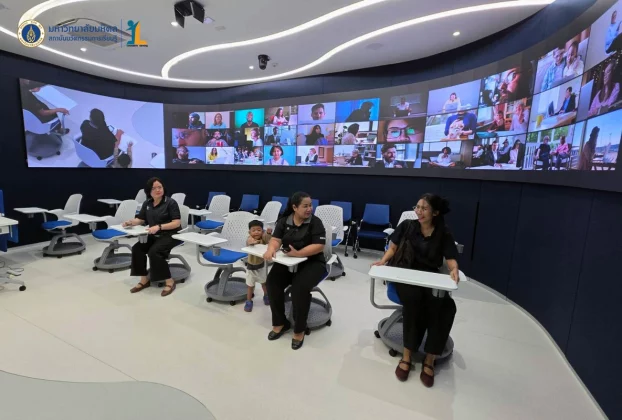
In addition, the Institute for Innovative Learning, Mahidol University, welcomed teachers from Nawaminthrachinuthit Satriwitthaya Phutthamonthon School to visit the Institute’s learning resources and modern teaching and learning facilities, including the Mahidol Media Lab, Multimedia Studio, Master Classroom, and Virtual Classroom. The visit provided teachers with opportunities to explore approaches to integrating digital technologies and multimedia into teaching and learning, as well as to exchange perspectives on the design of learning spaces and environments that support education in the digital era.
The workshop demonstrated the Institute for Innovative Learning’s contribution to translating its expertise in learning innovation, educational technology, and hands-on learning into meaningful learning experiences that respond to students’ developmental needs and educational contexts. Through experimentation, creativity, and systematic problem-solving, students were encouraged to become active participants in their own learning.
From an impact perspective, the activities supported the development of essential competencies, including analytical thinking, problem-solving, creativity, collaboration, and the ability to apply scientific and technological knowledge. At the same time, the teachers’ learning tour extended the impact beyond student development by supporting teacher capacity building and creating opportunities for educators to explore how innovative learning approaches and technologies could be applied in their own school contexts.
The “Exploring Science and Innovation” workshop therefore represents another initiative reflecting the Institute for Innovative Learning’s role in connecting knowledge, science, technology, and innovation with student learning and teacher development. Through meaningful hands-on experiences and knowledge exchange, IL continues to support future-ready skills and promote the practical application of knowledge in educational contexts.
* Individuals appearing in this article who wish to have their images removed, please contact us at 0-2441-9729 or ilpdpa@mahidol.ac.th.